Fire & Smoke Damper Services
Inspection, Testing, Repair & Installation
Hughes Sheet Metal opens the ceiling, cycles every damper, fixes what fails while the crew is still on site, and hands you the record that proves it.
A damper is only life safety equipment if it still closes
Dampers sit above ceilings for years without anyone touching them, and they fail quietly. Hughes Sheet Metal opens them up, cycles them under NFPA 80 and NFPA 105, corrects what does not work, and leaves you a record that holds up in front of a fire official, an accreditation survey, or an insurance audit.
Fire Doors & Other Opening Protectives
Governs periodic inspection and testing of fire dampers in rated assemblies.
Smoke Door Assemblies & Other Opening Protectives
Governs how smoke dampers and combination fire/smoke units are cycled and verified.
Required Inspection Cycle
Every four years in most facilities, every six years in hospitals, one year after install.
Listed Assemblies & Repairs
Repairs and replacements made to the manufacturer's listing, not improvised in the field.
What We Check on Every Visit
Link & Release Hardware
Heat-responsive links are pulled and read against their temperature rating. Anything corroded, painted over, or past its service life gets swapped before we leave the ceiling open.
Full Open-and-Close Cycle
We drop or command each damper, watch it travel the whole way shut, then reset it and confirm it parks back where the mechanical drawings say it belongs.
Blades, Frames & Seals
Our crew looks at what actually stops dampers from working: rusted blades, bent linkage, crushed sleeves, drywall screws through the frame, and duct liner packed into the closure path.
Photographed Records
Each damper leaves our visit with a tag, a location, a condition, and a dated photo, filed in a database Hughes keeps between cycles so nobody starts the next one from scratch.
Our Fire & Smoke Damper Inspection Process
NFPA 80 and NFPA 105 damper inspection, testing, repair, and installation for rated buildings
NFPA 80 & NFPA 105 Damper Compliance
Hughes Sheet Metal inspects, cycles, repairs, and installs fire dampers, smoke dampers, and combination units under NFPA 80 and NFPA 105. Hughes has run a sheet metal shop in Fall River since 1892, and that shop is why most of what fails an inspection is fixed the same day rather than written up and rescheduled. We work commercial, healthcare, educational, and industrial buildings across Southeastern Massachusetts, Greater Boston, and Rhode Island.
Facility Survey & Damper Inventory
Every engagement starts with a walk of the building. We locate and catalog every fire damper, smoke damper, and combination fire/smoke damper in the facility, then reconcile that count against your existing drawings and prior inspection records.
- Full building walk-through and damper location mapping
- Reconciliation against mechanical drawings and prior reports
- Identification of undocumented and inaccessible dampers
- Scope, access, and scheduling plan built from the verified count
Access Planning & Coordination
Most dampers sit above hard ceilings or behind finished walls. We plan access before the first panel comes down, coordinating with your facilities team so occupied spaces stay usable and after-hours work is scheduled where it matters.
- Access point identification and approval
- Occupied-space and after-hours work scheduling
- Infection control and dust containment planning where required
- Coordination with facilities, security, and life-safety staff
Inspection & Cycle Testing
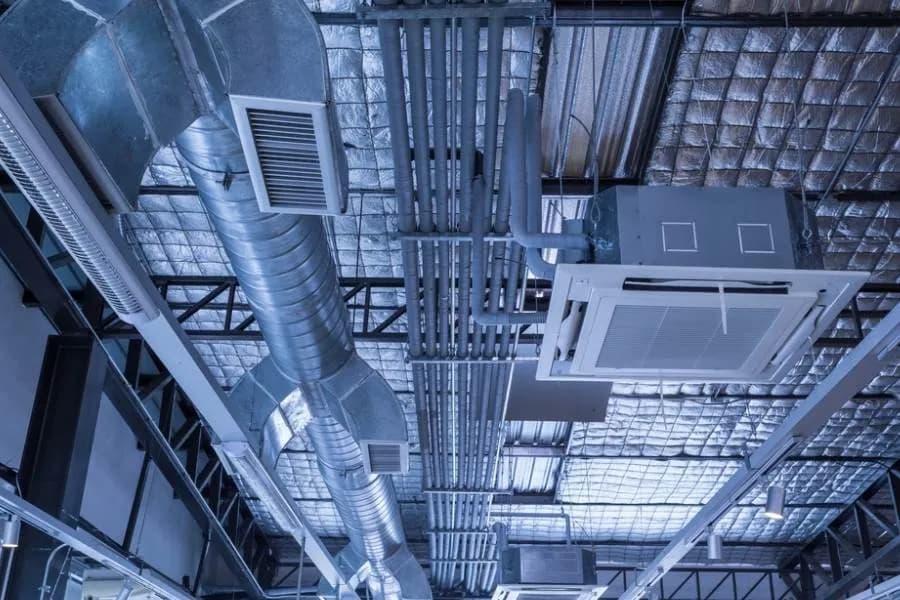
Each damper is inspected and cycled under the requirements of NFPA 80 and NFPA 105. We drop the fusible link or command the actuator, confirm the damper closes fully, reset it, and verify it returns to its normal operating position.
- Fusible link inspection and replacement as required
- Full open and close cycle on every damper
- Actuator testing on electric and pneumatic smoke dampers
- Inspection for rust, corrosion, blockage, and misalignment

Repair, Replacement & Re-Test
A failed damper is a deficiency on your record until it is corrected. Because we are a sheet metal shop, we repair and fabricate on site rather than waiting on an outside supplier, then re-test every corrected damper before we leave.
- On-site repair of linkages, blades, springs, and frames
- Actuator replacement and control reconnection
- Shop-fabricated sleeves, transitions, and retrofit assemblies
- Re-test and re-document every corrected device

Documentation & Compliance Reporting
You receive a report your authority having jurisdiction can actually use: every damper by location and ID, its condition, what was corrected, and dated before-and-after photos. Records are logged electronically so the next cycle starts from real data.
- Damper-by-damper results with location and unique ID
- Before-and-after photo documentation of all repairs
- Deficiency log with corrective action and completion dates
- Electronic records retained for the next inspection cycle

Ready to Schedule Your Damper Inspection?
Contact our team for a facility survey, a damper count, and a firm inspection schedule.
Damper Services
Whole-Building Damper Surveys
Fire dampers, smoke dampers, and combination units, counted and worked building-wide rather than sampled. Hughes would rather find the twelve nobody knew about now than have a fire official find them later.
Actuator & Control Checks
Electric and pneumatic units get exercised by hand and by command signal, because a blade that swings freely still fails you if the actuator is dead or the control wiring was never landed.
Reports Your Inspector Can Use
Location, tag number, result, and dated before-and-after photos, organized building by building. Hughes writes the report to be handed straight to a fire official without translation.
Same-Visit Corrections
Our metalworkers arrive with the shop behind them, so most failures are corrected while the ceiling is still open instead of becoming an open deficiency and a second mobilization.
A Fall River sheet metal shop, not just an inspector
Most damper inspections end with a list of everything that failed and a second appointment to fix it. Hughes has been fabricating ductwork in Fall River since 1892, so the crew that finds the deficiency is the crew that can correct it, and the sleeve or transition your retrofit needs gets made rather than ordered.
Every damper is handled by Hughes employees. Nothing is subcontracted out, so there is no gap between the people who found the problem and the people answering for it, and one Hughes contact stays with the building from the first walk-through through the final report.
Serving commercial, healthcare, educational, and industrial facilities across Southeastern Massachusetts, Greater Boston, and Rhode Island.
New installs and retrofits
Whether the dampers are going into a new build, a tenant fit-out, or a rated assembly that failed its last inspection, we fabricate and install to the manufacturer's listing and leave behind the access doors that make the next inspection cycle straightforward.
- New construction and tenant fit-out damper installation
- Retrofit and replacement of failed or obsolete dampers
- Shop-fabricated sleeves, transitions, and duct connections
- UL-listed access door installation for future inspections
- Firestopping and rated-assembly penetration detailing
- Coordination with fire alarm and building automation contractors
Find out which dampers pass, and fix the ones that don't.
Tell Hughes Sheet Metal about the building and we will come back with a damper count, an access plan, and a firm schedule.
Contact Hughes Sheet Metal→